The Goshawk (book)
H is for HawkThe Goshawk (book) is T. H. White’s account of training a goshawk, but in Helen Macdonald’s story it becomes more than a book about falconry: it is a recurring point of argument, memory, and recognition. First encountered in childhood and confronted again after her father’s death, it shapes how she understands the bird, White, and her own reasons for training a goshawk.
The book in childhood
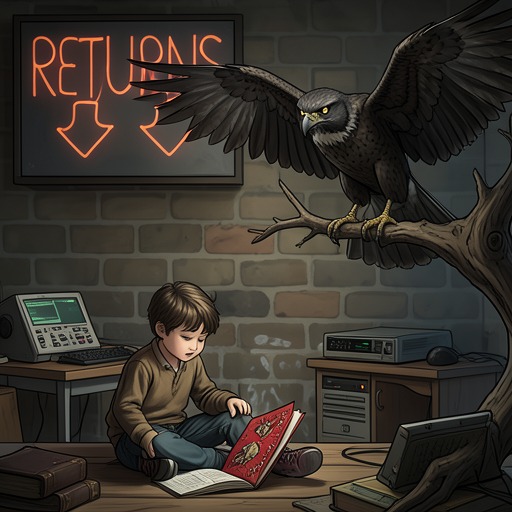
In the summer of 1979, eight-year-old Helen Macdonald found a paperback copy in a bookshop. Its back-cover description presented the training as a duel in which the falconer’s will wore down the wild bird’s resistance. The comparison to stories of seduction puzzled her; the cover did not. It showed a goshawk gripping a glove, its fierce appearance so compelling that her fingers seemed to prickle in sympathy. She wanted the book because of the hawk.
At home, she read the opening and found an account unlike the instructional falconry books she knew. White wrote about his bird as frightening and difficult, and to the child this suggested that he did not know how to train it properly. The book also wandered into subjects she could not connect to hawking, including foxhunting, war, and history. Its references to the Holy Roman Empire, Strindberg, Mussolini, and a pickelhaube seemed beside the point. Her expectation was that an adult author would explain how to do something; White instead wrote about struggling and failing to master it.
A review in an old British Falconers’ Club journal appeared to settle the matter. It dismissed the book as a catalogue of what not to do in manning and training a hawk. Helen took comfort in this verdict, which authorized her to regard White as a fool. Yet the hawk in the book remained vivid and intelligible to her. Gos had steely pinions, a bright eye, and a habit of covering a fist with his wings; he also made small sounds and feared cars. The child could feel affection for the bird even while the writer remained incomprehensible.
Adult rereading and disagreement
Years later, when Helen became a falconer, she still preferred falcons and regarded goshawks as unnerving, difficult birds. Her view had been formed partly by a tradition that praised the peregrine as noble and perfect while describing the goshawk as unruly, disagreeable, or frightening. Falconry itself carried social distinctions: flying falcons properly required broad open country, such as grouse moors and large estates, while goshawks could hunt from the fist at closer range in more varied places. Older writing also disparaged the solitary austringer, the trainer of goshawks and sparrowhawks. The book belonged to a history in which birds and their handlers were judged through assumptions about temperament, status, and proper conduct.
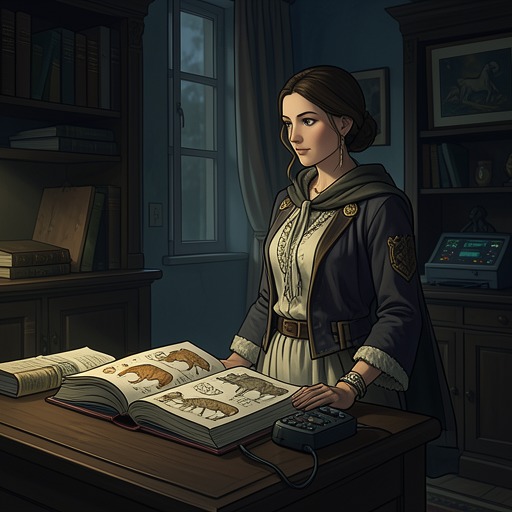
When Helen decided to train a goshawk, an offer to fly a falcon did not change her choice. The red-covered copy of The Goshawk (book), with its silver-lettered spine, then became impossible for her to ignore on the shelf beside her desk. Four months after her father died, she finally took it down. The water-stained, scuffed volume seemed ordinary in her hands, but opening it brought back the apprehension of her eight-year-old self. The book’s physical presence had become a point of resistance: she knew she did not want to look at it, yet could not separate that aversion from the question of why she had chosen to train a hawk.
On rereading, she recognized the book as more than bad falconry. White had made the encounter between man and animal a metaphysical contest, a struggle with spiritual stakes. His admissions of ignorance now seemed brave rather than foolish. Her disagreement, however, remained. She objected that Gos had suffered during the attempt to train him and that White’s battle-like account had helped shape popular ideas of goshawks and falconry. To Helen, hawking was not a war, and hawks were not monsters. The adult reader understood the book’s literary force without withdrawing the child’s anger at its portrayal of the bird.
A book that follows its reader
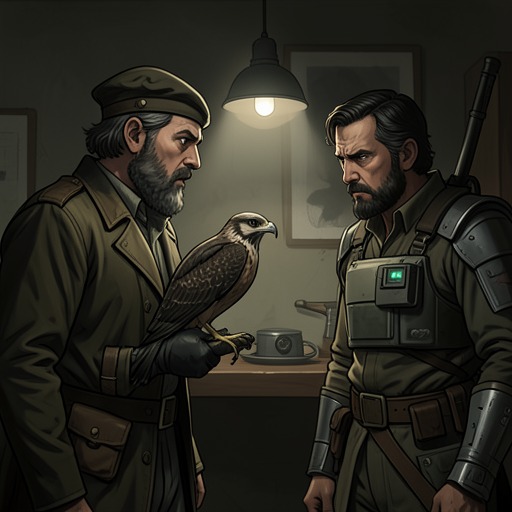
The book’s influence persisted as Helen trained her own hawk. She describes White as present in that work—not as a literal apparition but as a writer whose choices and life continued to trouble her. Training her bird opened a view onto the parallel situation of a man hurting and being hurt alongside a hawk. Helen recognized in White a desire to cut loose from the human world and escape into wildness, while also seeing the cost of that desire. The book thus became part of her own story without becoming a biography of its author.
The encounter also unsettled her confidence in what a goshawk was. Falconry books had taught her to expect a difficult, sulky bird, and she found that historical descriptions could make the animal seem defined by its supposed bad temper. In her own relationship with Mabel the goshawk, careful observation and everyday interaction disclosed responses those descriptions had left out. The hawk could play with paper and respond to a human companion; such moments challenged the inherited portrait of goshawks as merely hostile. Helen’s rereading of White belongs to this larger revision: books do not simply record animals but can narrow or enlarge the reader’s expectations of them.
Literary and personal significance
The Goshawk (book) occupies several positions at once: it is a childhood object associated with the illustrated bird on its cover, a disputed account of training, and a work whose literary ambition Helen came to recognize. Its return to the desk after her father’s death made an old reading experience newly consequential. Helen realized that her wish to train a hawk was not entirely her own; some part of it belonged to her father. That recognition did not resolve her anger at White or her doubts about his methods, but it explained why the book had become so difficult to face.
The tension between the young reader’s certainty and the adult falconer’s more complicated judgment gives the book its particular force in Helen’s narrative. She can admire White’s willingness to write from failure and see the metaphysical reach of his encounter with Gos, while remaining alert to the harm done to the hawk and to the cultural legacy of portraying goshawks as monstrous adversaries. The book’s significance lies in that unresolved conversation: it helps Helen trace how childhood fascination becomes practice, how inherited descriptions shape human expectations, and how training her own bird changes what she can see in White’s account.